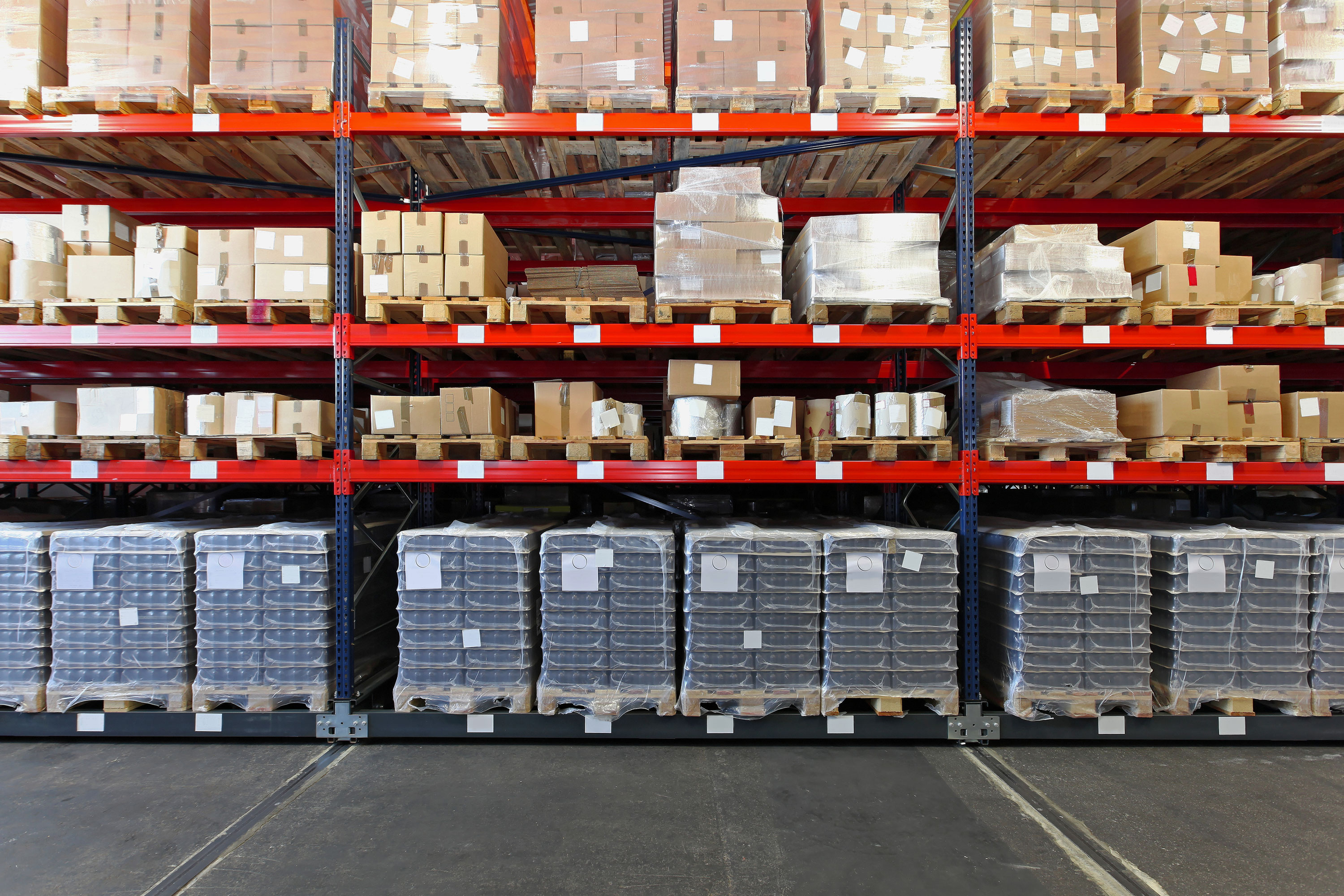
Warehouses have seen rapid change lately. Fast-moving supply chains and labor shortages have driven a growing need for better efficiency in warehouse workflows, and more operations are adopting RFID to meet the challenge.
But what is RFID?
RFID stands for radio-frequency identification — tags that communicate over radio waves. The tags talk to readers such as handheld scanners or fixed RFID readers, which report what they see back to your software.
The RFID advantage.
Before RFID, all scanning was done with traditional barcode systems. RFID brings several advantages over that:
- Longer read ranges — passive RFID tags can be read from up to 30 feet.
- Rapid reads — a scanner can read hundreds of tags at the same time.
- No line of sight needed — tags can be oriented many different ways and still get read.
Faster, more accurate inventories
With a powerful handheld RFID scanner, an inventory no longer needs a team of workers toiling over many days. Inventories with passive RFID can be completed in a fraction of the time, with fewer mistakes. See the Handheld module.
Automated stock management
You can set up monitoring for automated stock management with passive RFID. With the right combination of hardware and software, the system can send automatic notifications when stock needs refilling — before anyone has to notice a gap on the shelf.
Instant dock-door visibility
As pallets arrive and are unloaded, workers can automatically see which SKUs and quantities are coming in. That automation saves countless man-hours in the shipping department. It's a natural fit for a passive RFID dock door or a Chokepoint portal.
The cons of RFID in warehouses.
RFID automation in the warehouse can be a big cost-saver — but only if it's done properly. There are real problems that can arise from the wrong technology choices.
Choosing the wrong tags
Choosing the right kind of tag is critical to adopting RFID in a warehouse. Different tags have different abilities: some are made for paper or plastic products, and some only work on metal. There's also a wide range of tag sizes with different range specifications. All of this has to be accounted for — our guide to selecting the right passive RFID tags walks through it.
Buying the wrong printers
Just like tags, RFID printers come in a variety of configurations that a company has to be careful about. Some printers are compatible with only certain tags, so confirm the pairing before you buy either one.
Configuring readers incorrectly
A deep understanding of RFID helps ensure readers are configured to work well in warehouse conditions. Readers combined with antennas have different performance characteristics, so choosing the right reader-and-antenna combination — and knowing how best to configure the hardware for the environment — is critically important. The Fixed Reader module covers the fixed-infrastructure side.
Consult with an expert.
Choosing the right combination of RFID hardware can be very challenging. Many companies decide to consult an RFID expert to make sure they're doing everything right, rather than discovering an expensive mismatch after go-live.
InfinID Technologies is here to help.
Here at InfinID, we provide professional services to go on-site at a customer's facility and perform an RFID needs assessment. We review all of your requirements to make sure you receive exactly what you need for an outstanding solution. Explore our packaging & pallet tracking solution or browse the product catalog.