Battery-free
passive UHF tags
Everything that goes into a passive RFID system — choosing tags, printers, and readers, picking the software, and the everyday workflows passive UHF RFID powers: check-in/out, inventory, and location tracking.
A passive RFID tracking system automatically identifies and locates your assets using battery-free tags that are powered by RFID readers. It has four parts working together: RFID tags on the assets, RFID printers to encode and label them, RFID readers to pick them up, and RFID software to run everything. Passive UHF tags have no battery, so they cost little and last indefinitely — but they only respond when a reader energizes them, which shapes how you design the system. In practice you use handheld readers for inventory counts and searching, and fixed readers at doors and portals for automatic, hands-free tracking. InfinID recommends AssetWorx! as the software that ties the hardware together — it works with passive RFID, active RFID, or a combination of both. This guide walks through each piece, then the common workflows passive RFID powers.
Passive RFID tags are attached to the assets you need to track. They have no battery — instead, they're powered by an external RFID reader whenever they come into range. Every passive tag, no matter its shape, is built from the same three parts.
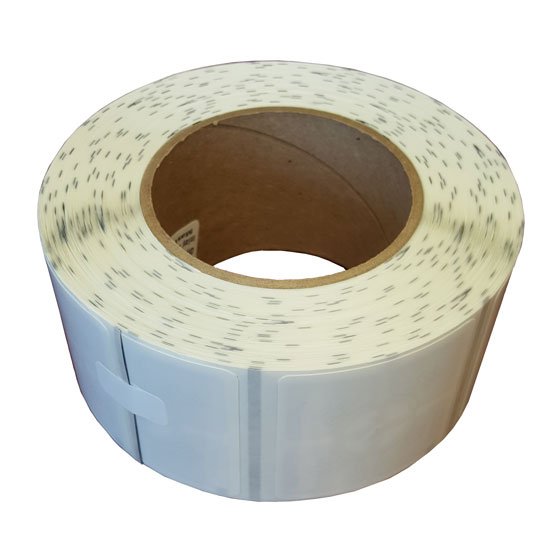
There are hundreds of RFID tag variations, each with slightly different performance. Picking the right one can be the difference between success and failure of an RFID project. Two characteristics matter most:
An RFID label is a paper label that encapsulates the inlay. An RFID printer prints the human-readable information on that label and programs the RFID tag at the same time. Printers aren't always required — you can order pre-commissioned tags ready to use — but a printer gives you the flexibility to create tags on demand.
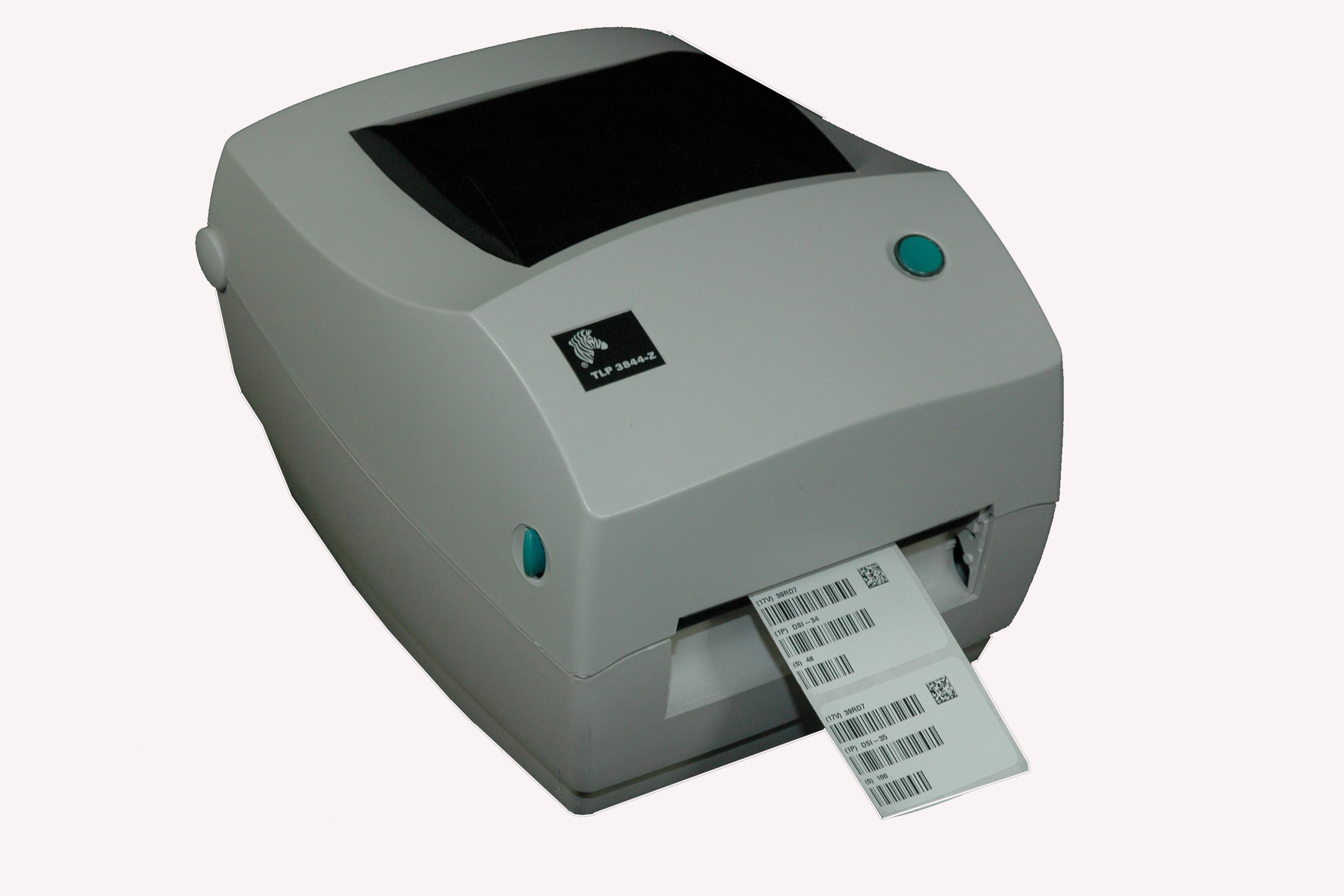
Choosing the right label-and-printer combination matters: some tags only work with certain printers. It pays to get it right the first time by consulting an expert before you buy.
A passive RFID tag does nothing until a reader powers it. Different readers are tailored to different jobs, and the two main families — mobile and fixed — do very different things.
Mobile readers are handhelds with RFID built in, usually shaped like a gun: you pull the trigger to start reading the tags nearby. They come as an integrated unit or as a "sled" that clips onto a phone or mobile computer. Because a person operates them, they're ideal for inventory counts and searching — but not for automatic tracking.
Fixed readers mount on a wall or ceiling and have ports where RFID antennas attach; integrated fixed readers bundle the reader and antennas into one package. Tracking happens automatically whenever a tag passes within range of the fixed reader — no human in the loop. That makes fixed readers the foundation of hands-free, automatic passive RFID tracking. (For a deeper walkthrough of fixed-reader placement, see our guide to active tracking with RFID.)
Software is the piece that drives all the hardware. Tracking and managing your physical assets is essential but labor-intensive — time away from your core business. The good news is you can manage assets quickly and affordably with the right software.
InfinID typically recommends AssetWorx! for RFID tracking. It works with passive RFID, active RFID, or a combination of both technologies — so the same system that reads your passive tags at a dock door can also track active V-Tag mesh tags by zone across an open floor. One record, one map, both technologies.
Once the hardware and software are in place, a handful of workflows deliver most of the value. Some run on commercial off-the-shelf software like AssetWorx!; others may call for a custom solution.
A checkout station helps you check assets in and out — tool cribs, storage closets, IT equipment, asset lockers. RFID speeds up the process, which usually improves employee compliance. Stations come in two common configurations: a mobile scanner, and a fixed-reader station that reads items automatically as they pass.
Periodic inventories are done with mobile RFID readers — the user walks room to room. The inventory screen first shows what assets are expected in the room; the user squeezes the trigger and the scanner rapidly reads the tags present. Items change color as they're read, so the user simply walks the room until everything expected has turned up.
Location tracking with passive RFID means placing fixed readers at strategic points to monitor asset movement. It can be challenging, so choosing the right hardware and software is vital. First, identify where you actually need tracking and check the practical read range:
Room tracking is one of the easiest location applications: place a fixed reader at each room entrance for room-level accuracy. Doorways are narrow, so tune the antenna coverage for maximum read reliability right at the threshold.
Tracking in an open environment is harder, because assets can take many paths. Two layouts help:
Passive UHF is superb for high-volume reads at choke points — doors, docks, portals. But when there's no doorway to cover and you need continuous, hands-free awareness across an open floor, that's the job for active RFID.
InfinID's V-Tag is an active RFID tag built on a patented Zigbee self-healing mesh: battery-powered tags relay for one another and report which zone each asset is in, with no fixed-reader grid to install. It's honest about what it is — dependable zone-level location that settles across the mesh in roughly 3–4 minutes, not RTLS and not a live GPS dot. Because AssetWorx! runs passive and active together, you can start with passive UHF and add V-Tag mesh wherever open-floor visibility calls for it.
Tell us what you need to track and we'll help you choose the right tag-and-printer combination, the readers, and the software — and quote it on AssetWorx!.
Request a quote